
 By mike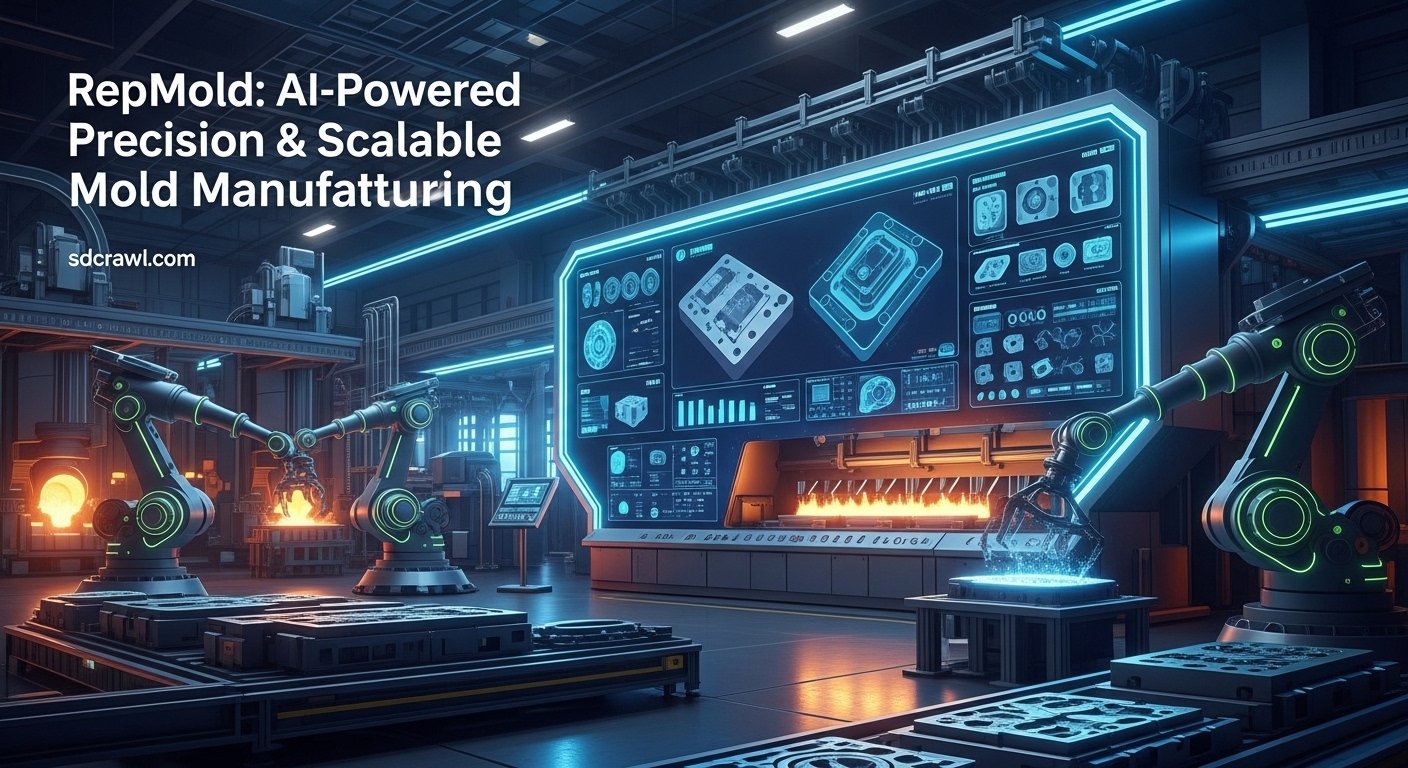
In today’s rapidly evolving industrial landscape, manufacturing companies are constantly seeking ways to enhance productivity, reduce costs, and deliver superior quality. One of the most transformative advancements shaping this evolution is the application of artificial intelligence (AI) in manufacturing processes. Among the innovations that have begun to revolutionize industrial production is RepMold, an AI-powered mold manufacturing technology that brings unprecedented precision, efficiency, and scalability to mold production.
Mold manufacturing—also known as tooling—lies at the heart of many industrial processes. Whether producing automotive parts, consumer electronics, medical devices, or household goods, the quality of molds directly influences the final product’s performance and cost. Traditional mold manufacturing methods have long been constrained by human labor limitations, time-intensive design processes, and material waste. RepMold aims to change that paradigm by incorporating AI at every stage of mold production.
What Is RepMold?
RepMold is an advanced mold manufacturing technology that uses AI algorithms to optimize the entire mold creation workflow. It blends state-of-the-art machine learning, computer vision, and automation to improve design accuracy, accelerate production timelines, reduce material waste and enhance scalability. From initial conceptualization to final inspection, RepMold’s AI-based system intelligently orchestrates each step.
Rather than relying on manual design and adjustment, RepMold analyzes design requirements, predicts potential production challenges, and generates optimized mold configurations. It works hand-in-hand with skilled engineers, amplifying human expertise with intelligent automation and data-driven insights.
How RepMold Works
To understand RepMold’s value, it’s important to examine how it functions within the mold manufacturing lifecycle:
1. Digital Design Optimization
At the foundation of RepMold is its AI-driven design optimization. Instead of manually crafting mold designs, engineers input product specifications and performance criteria into RepMold’s system. The AI then uses advanced algorithms to generate optimized designs that meet or exceed specifications.
The system evaluates thousands of potential configurations in seconds—something human engineers might take weeks to achieve. This not only speeds up the design phase but allows for greater precision and attention to detail.
2. Predictive Error Detection
One of the biggest challenges in mold manufacturing is identifying flaws early. Traditional techniques often detect issues during production, resulting in costly rework. RepMold’s AI addresses this problem with predictive error detection.
Using data from previous mold projects, coupled with real-time analytics, RepMold anticipates where errors or defects might occur. When a risk is detected, the system alerts engineers and suggests corrective measures. This predictive capability ensures fewer mistakes, lower scrap rates, and improved product quality.
3. AI-Guided Production Control
Once a mold design is finalized, RepMold moves into production. Here, it controls CNC machines, 3D printers, and other manufacturing equipment using AI-guided parameters. These instructions adjust feed rates, cutting speeds, and build paths to maximize efficiency.
Through machine learning, the system continually refines these parameters based on operational feedback. For example, if a change in material properties influences milling performance, RepMold automatically compensates for it. This real-time adaptation streamlines production and ensures consistent results.
4. Quality Inspection & Continuous Learning
After production, quality inspection is critical. RepMold integrates AI-assisted visual and dimensional inspection tools that compare the manufactured mold against the digital design.
Any deviation triggers an alert—and the system records the discrepancy for future learning. Over time, RepMold becomes smarter, continuously refining its models and enhancing future production accuracy.
Benefits of RepMold Technology
RepMold delivers a host of benefits that make it attractive to manufacturers of all sizes. These advantages are reshaping how companies approach mold manufacturing:
1. Enhanced Precision
Accuracy is central to mold performance. A slight deviation in mold geometry can affect the fit, function, and aesthetics of the final product. By using AI to evaluate design and manufacturing parameters, RepMold achieves tolerances well beyond conventional techniques. Precision improvements translate to higher product quality and fewer customer returns.
2. Accelerated Production Timelines
Traditional mold production can be slow, especially when multiple design iterations are required. With RepMold, design optimization, error prediction, and production control are significantly faster. Companies can reduce lead times from weeks or months to days or even hours, accelerating product launches and time-to-market.
3. Reduced Waste and Cost Savings
One of the largest inefficiencies in traditional tooling is material waste. Trial-and-error design modifications, unnecessary rework, and inefficient machining paths all contribute to excess waste. RepMold’s AI minimizes these inefficiencies by predicting errors and optimizing operations in advance. Less waste means lower material costs and a smaller environmental footprint.
4. Increased Scalability
Scalability is essential for businesses looking to grow. RepMold’s flexible platform supports a wide range of mold types and materials, allowing manufacturers to scale operations without compromising quality. Whether producing a limited batch or fulfilling large contracts, RepMold adapts with ease.
5. Improved Workforce Productivity
By automating repetitive tasks and augmenting engineering expertise, RepMold empowers workers to focus on higher-value activities. Engineers spend less time on mundane adjustments and more time on innovation. This shift not only boosts productivity but also enhances job satisfaction.
Real-World Applications
RepMold’s versatility makes it useful across multiple industries:
Automotive Manufacturing
In automotive production, precision molds are essential for components such as plastic bumpers, dashboards, and engine components. RepMold reduces design cycles and improves accuracy, helping manufacturers deliver parts that meet strict safety and performance standards.
Consumer Electronics
As electronics components shrink and become more complex, molds must achieve exacting tolerances. RepMold’s AI capabilities ensure that intricate designs are faithfully reproduced, supporting high-volume production without quality loss.
Medical Devices
Medical devices often demand the highest levels of precision and regulatory compliance. RepMold’s predictive error detection and inspection tools help ensure molds meet strict tolerances—an important factor in patient safety and regulatory approval.
Aerospace & Defense
In aerospace, the stakes are high, and precision is critical. RepMold enhances reliability while shortening production timelines—advantages that are particularly valuable for components used in aircraft and defense systems.
Challenges and Considerations
While RepMold represents a significant leap forward, its adoption is not without challenges:
Initial Investment
Integrating AI-driven systems like RepMold requires upfront investment in software, hardware, and staff training. For small manufacturers, the cost may seem daunting, but long-term savings and productivity gains typically offset early expenditures.
Data Dependency
AI systems thrive on data. RepMold’s predictive accuracy improves with extensive datasets. Manufacturers with limited historical data may need to invest time in data collection and curation before fully benefiting from the system.
Workforce Adjustment
AI automation may change workforce roles. Some traditional tasks may be reduced or altered, which requires retraining and upskilling to ensure employees can work effectively with the new technology.
Future Potential
The potential of RepMold is far from fully realized. As AI models become more advanced and data availability increases, the system is poised to become even more sophisticated. Potential advancements include:
-
Autonomous Design Generation: AI that can independently propose design concepts based on market trends and performance requirements.
-
Self-Optimizing Production: Systems that fully automate machine adjustments without human intervention.
-
Smart Supply Chain Integration: Real-time coordination between mold production, material suppliers, and delivery logistics to optimize inventory and reduce lead times.
Conclusion
RepMold: AI-Powered Precision & Scalable Mold Manufacturing represents a transformative approach in industrial tooling. By harnessing the power of artificial intelligence, RepMold redefines what’s possible in mold design, production, and inspection. The result is a system that delivers unparalleled precision, accelerates production, reduces costs, and supports scalable manufacturing solutions.
While challenges exist—such as initial investment and data requirements—the long-term benefits are significant. Manufacturers that adopt RepMold gain a competitive edge, enhance product quality, and position themselves for future growth.
In an era where speed, accuracy, and efficiency are paramount, RepMold stands at the forefront of manufacturing innovation—ushering in a new age of intelligent, lean, and scalable production.